Nowadays, many more organizations across industries appear under increasing pressure to improve their performance and gain new competitive advantages. Among others, it can be achieved by implementing cutting-edge technologies. In this context, Artificial Intelligence (AI) often seems to be a one-size-fits-all solution, and it actually turns out to be so. Companies that opt for AI can improve the effectiveness of their operational process and reduce costs. AI is also often associated with innovations and brand-new business strategies. Those can easily upgrade the business, provided that they are implemented in line with the business specifics. Even though AI seems to be a magic wand, it has to be applied wisely.
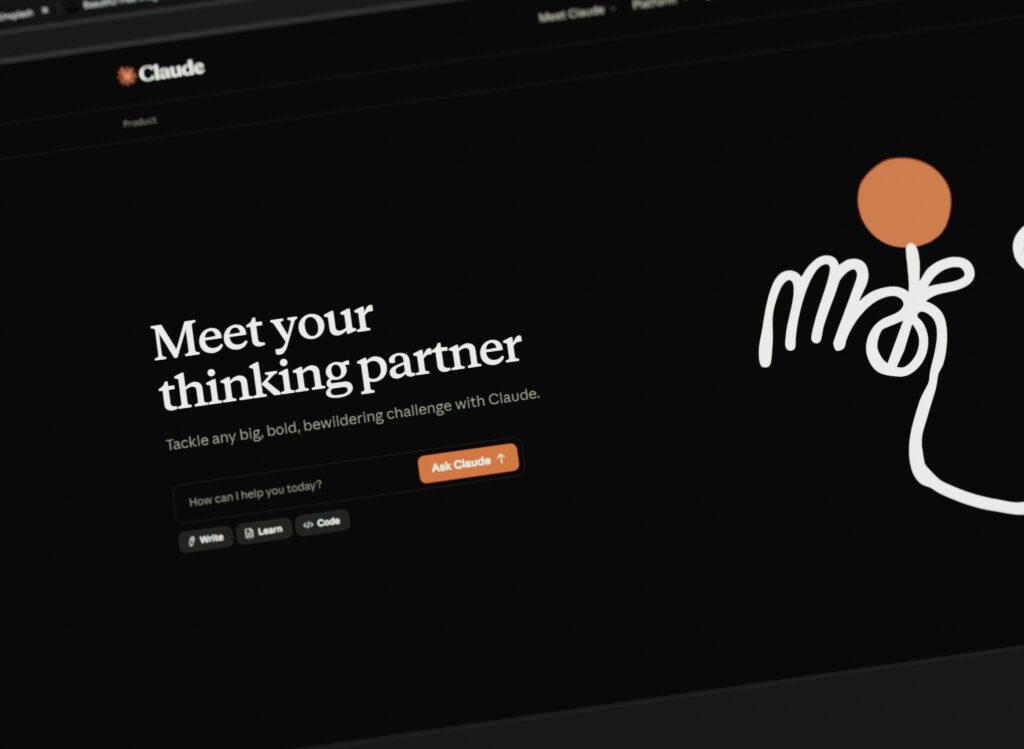
Beyond mere convenience, AI has already become essential to navigate and manage complex processes. It can ensure faster and more accurate data processing. AI also enables companies to ensure better coordination across existing systems and teams. Claude is specifically designed to help organizations cope with growing datasets and more complicated assignments by leveraging a large language model across multiple operational processes. When Claude is applied correctly, it can significantly streamline documentation, enhance collaboration, and ensure steady process improvement. In fact, it can handle a wide array of assignments, from summarization to complex reasoning and even code generation. The professionals from the AI development agency will delve into details about how this technology can enhance operations, allowing employees to focus on high-value work.
Process Development Essentials
Many businesses recklessly treat process development within their organizations, limiting it to internal policies and a few tools. However, process development is much more complicated and requires attention to many details. Speaking more precisely, it requires a comprehensive approach, touching process design, evaluation, optimization, and standardization of workflows. Given the number of assignments on the agenda, it should already be obvious that coping with all of them manually is almost never feasible, while sometimes it is merely impossible. Many versions and strategies have to be verified in real life. This may take lots of time. Here is where AI can step in and ensure faster operation across multiple processes and testing strategies.
Effective process development based on accurate assessment and testing helps organizations ensure multiple positive effects:
- Enhance operational effectiveness
- Upgrade data processing approaches
- Reduce the risk of manual errors
- Increase consistency across processes
- Improve employee onboarding and performance
- Strengthen compliance
- Support business scalability
While traditional process improvement relies more on manual analysis and extensive documentation, AI can significantly accelerate many of the above activities. Claude is particularly useful in this case since it can analyze enterprise data quickly and accurately, generating useful recommendations in the end.
Claude Use Cases to Enhance Different Aspects of the Company’s Workflows
Accurate Data Analysis and Summarization
For any enterprise, specifically a large-scale one, data matters a lot, especially when it is collected on a large scale. Even data scientists use Claude to process and summarize massive datasets, technical documentation, and research papers. This technology can be equally effectively applied to many internal enterprise processes. It provides meaningful data analytics, allowing managers and business owners to see any issues or opportunities that can impact the business growth. Claude is effective given its ability to handle and analyze long contexts accurately. One vivid example of how this technology can be practically applied is generating executive summaries from dense quarterly reports and technical logs. Still, professional developers may adapt this technology for a variety of analytical assignments.
Internal Knowledge Management
Claude can be effectively applied to assist employees with resolving any issues appearing within the organization. They can ask natural language questions about the company’s internal processes, policies, technical documentation, and project histories. Using this technology greatly streamlines knowledge sharing and reduces time on developing solutions. Claude can easily and effectively synthesize information from different sources, providing a coherent answer to the question an employee asks.
For a business that handles thousands of pages of documentation, Claude may be irreplaceable. Among others, it can process and streamline decision-making for employees who need to work with:
- Standard operating procedures
- Internal policies and compliance standards
- Technical manuals and guides
- Project documentation and specification
- Customer support resources
Claude can help employees summarize lengthy documents, identify inconsistencies, locate the most relevant information, and accomplish many other data-related assignments. This technology can also recommend useful updates. As you may guess, Claude significantly reduces the time spent on searching across multiple sources while greatly enhancing access to organizational knowledge.
Accelerating Business Process Mapping
Mapping business processes traditionally requires significant manual work and time. Still, neglecting this assignment for that reason is even a bigger mistake. This assignment is prone to mistakes. Claude can assist with structured workflow analysis and descriptions. This technology can help teams to analyze and visualize accurately inputs and outputs across different processes and organizational levels. Claude can also clearly identify decision points and dependencies. It is effective in identifying approval stages and decision-making. Even though human assessment and validation remain essential, they can be done faster and more accurately when Claude technology steps in.
Identifying Process Bottlenecks
This aspect deserves special attention since these are turning points for ensuing effectiveness. Those have to be identified precisely, along with possible inefficiencies in existing workflows. Claude is a technology that can assist with these assignments to the fullest. This AI technology can help process managers with the following goals in mind:
- Assess and compare different workflows across connected departments
- Identify duplicated assignments
- Emphasize unnecessary approval steps, i.e., eliminating them will not affect the overall efficiency
- Analyze and detect inconsistent terminology
- Highlight actions required to improve workflows
To this end, it is essential to note that Claude doesn’t replace human expertise. It is an intelligent assistant that streamlines data analysis and makes it more effective, providing business managers with recommendations on how to optimize internal processes.
Supporting Cross-Department Collaboration
Process development is never isolated. It implies effective collaboration between different departments and professionals. Most often, these are operations, sales, IT, human resources, and customer support departments. They typically share the same workflows. Ensuring effective collaboration between these departments is never an easy assignment. It requires tools that enhance effectiveness and streamline workflows. Claude can overtake many of the routine, resource-intensive assignments, including the following:
- Summarize feedback from different involved actors
- Consolidate meeting notes and discussions
- Compare and highlight key points of departmental procedures, including those relevant to a specific assignment on the agenda
- Draft proposals and other documents
- Maintain consistent documentation
The results provided by Claude allow stakeholders to focus more on strategic decision-making instead of manual, administrative work. AI can also provide them with the details or trends that could be previously overlooked.
Improving Customer Processes
For some companies, customer support is crucial. Claude allows them to minimize the risk of errors and time to provide the answer to the question that interests a customer. This technology can significantly improve the response quality by doing the following:
- Analyzing and summarizing previous customer conversations
- Recommending troubleshooting steps and drafting responses
- Identifying the most common existing issues customers deal with most often
- Suggest the most relevant knowledge base updates
- Identify possible process gaps and suggest measures to resolve them.
Claude is one of the most effective AI technologies that can improve customer service operations, including in large-scale organizations.
Enhancing Document Quality
All processes across the organization have to be well-documented to ensure operational effectiveness. Still, preparing such documents is often time-consuming and complicated. Some documents become outdated over time as well. Claude can effectively assist with a variety of assignments:
- Standardizing document content and formatting
- Ensuring consistent terminology and simplifying complex technical language in some documents, where it is possible
- Updating and rewriting, when necessary, internal procedures
- Generating summaries for executives
This input always allows the organization to create living documentation that is grounded in the company’s real-life processes.
Improving Employee Onboarding and Management
Onboarding employees is most often resource-intensive. It requires many hours spent on training and providing feedback. Claude can fully support these organizational processes by providing conversational access to the company’s documentation. This technology can fully replace a human mentor, saving a great deal of time and resources. Employee managers need only assess and track the progress, providing feedback on a case-by-case basis only. Instead of searching multiple systems manually and making mistakes, new employees can rely on AI technologies. The same applies to existing employees who can streamline problem-solving using Claude.
Enables Continuous Process Improvement
It is another valuable implication of Claude. Where human imagination is limited, AI can bring 10+ feasible options to the agenda. Process improvement is not an occasional assignment, but an ongoing process. It relies on assessing information from multiple sources, such as customer feedback, internal support inquiries, incident reports, and even employee suggestions. This technology can effectively process this data and develop the most feasible solutions that improve the system operation in certain terms.
Advanced Technologies and Best Implementation Practices Make a Difference
Applying AI occasionally or even implementing it in the company’s internal processes may considerably ease the internal management and improve the overall operational effectiveness. Still, it is essential to approach these assignments carefully and clearly identify the goals and performance metrics. Developing a step-by-step action plan is another key milestone. Based on that, Claude can be adapted accordingly to the specifics of internal processes. If you find it complicated to navigate and integrate seamlessly into your operational process, professional AI developers are ready to ensure tailored solutions for your business needs and goals for now.
 Marlene Schillingarin writes the kind of latest technology news content that people actually send to each other. Not because it's flashy or controversial, but because it's the sort of thing where you read it and immediately think of three people who need to see it. Marlene has a talent for identifying the questions that a lot of people have but haven't quite figured out how to articulate yet — and then answering them properly.
They covers a lot of ground: Latest Technology News, Emerging Tech Trends, Tech Tutorials and How-To Guides, and plenty of adjacent territory that doesn't always get treated with the same seriousness. The consistency across all of it is a certain kind of respect for the reader. Marlene doesn't assume people are stupid, and they doesn't assume they know everything either. They writes for someone who is genuinely trying to figure something out — because that's usually who's actually reading. That assumption shapes everything from how they structures an explanation to how much background they includes before getting to the point.
Beyond the practical stuff, there's something in Marlene's writing that reflects a real investment in the subject — not performed enthusiasm, but the kind of sustained interest that produces insight over time. They has been paying attention to latest technology news long enough that they notices things a more casual observer would miss. That depth shows up in the work in ways that are hard to fake.
Marlene Schillingarin writes the kind of latest technology news content that people actually send to each other. Not because it's flashy or controversial, but because it's the sort of thing where you read it and immediately think of three people who need to see it. Marlene has a talent for identifying the questions that a lot of people have but haven't quite figured out how to articulate yet — and then answering them properly.
They covers a lot of ground: Latest Technology News, Emerging Tech Trends, Tech Tutorials and How-To Guides, and plenty of adjacent territory that doesn't always get treated with the same seriousness. The consistency across all of it is a certain kind of respect for the reader. Marlene doesn't assume people are stupid, and they doesn't assume they know everything either. They writes for someone who is genuinely trying to figure something out — because that's usually who's actually reading. That assumption shapes everything from how they structures an explanation to how much background they includes before getting to the point.
Beyond the practical stuff, there's something in Marlene's writing that reflects a real investment in the subject — not performed enthusiasm, but the kind of sustained interest that produces insight over time. They has been paying attention to latest technology news long enough that they notices things a more casual observer would miss. That depth shows up in the work in ways that are hard to fake.