
Software development is evolving faster than ever, and AI in software engineering is at the center of that transformation. If you’re here, you’re likely looking to understand how AI is reshaping the way applications are designed, built, tested, and maintained—and what that means for developers, teams, and businesses moving forward.
This article breaks down exactly how AI is being integrated into modern engineering workflows, from automated code generation and intelligent debugging to predictive analytics and DevOps optimization. You’ll discover practical use cases, real-world benefits, and the challenges teams must navigate to use AI effectively and responsibly.
Our insights are grounded in up-to-date industry research, hands-on testing of AI-powered development tools, and analysis of emerging engineering trends. Whether you’re a developer, tech leader, or enthusiast, this guide will give you a clear, actionable understanding of where AI stands in software engineering today—and where it’s headed next.
The Next Evolution: AI’s Role in Modern Software Development
AI integration in the Software Development Life Cycle is no longer optional; it’s a competitive baseline. Yet while teams agree on the why—speed, quality, smarter testing—they often stall on the how. So, where do you start? Begin with AI-assisted planning, using predictive backlog prioritization. Next, embed AI in software engineering tools for code generation and review. Then, automate testing with anomaly detection before deploying through intelligent CI/CD pipelines. Admittedly, skeptics worry about overreliance; however, human-in-the-loop governance mitigates risk. Looking ahead, I speculate that adaptive AI-driven architectures will soon self-optimize in production.
Beyond Code Completion: Tangible Benefits of AI Integration
The real impact of AI in software engineering isn’t flashy autocomplete; it’s the quiet hum of tasks disappearing from your to-do list. Picture the soft clatter of keys as boilerplate code materializes instantly, documentation drafts itself in clean, readable prose, and sprawling legacy functions are refactored with surgical precision. Repetitive work fades, leaving developers free for high-level architecture and creative problem-solving.
Quality improves in ways you can almost feel. AI-driven static analysis scans code like a meticulous editor, flagging race conditions, injection risks, and brittle anti-patterns before they ever reach production. Instead of the stomach-drop of a late-night security alert, you get calm, real-time guidance woven into your IDE.
Testing accelerates, too. From a simple user story, models generate thorough unit and end-to-end cases, while visual regression tools catch subtle UI shifts—the off-by-one pixel misalignment you’d otherwise only notice when it “looks off.” The feedback loop tightens, steady and reassuring.
Even project management grows sharper. By analyzing historical velocity and ticket flow, AI forecasts timelines, highlights bottlenecks, and suggests smarter resource allocation (pro tip: feed it clean data). The result feels less like chaos and more like a well-tuned engine humming smoothly.
A Practical Roadmap: Integrating AI Across the SDLC
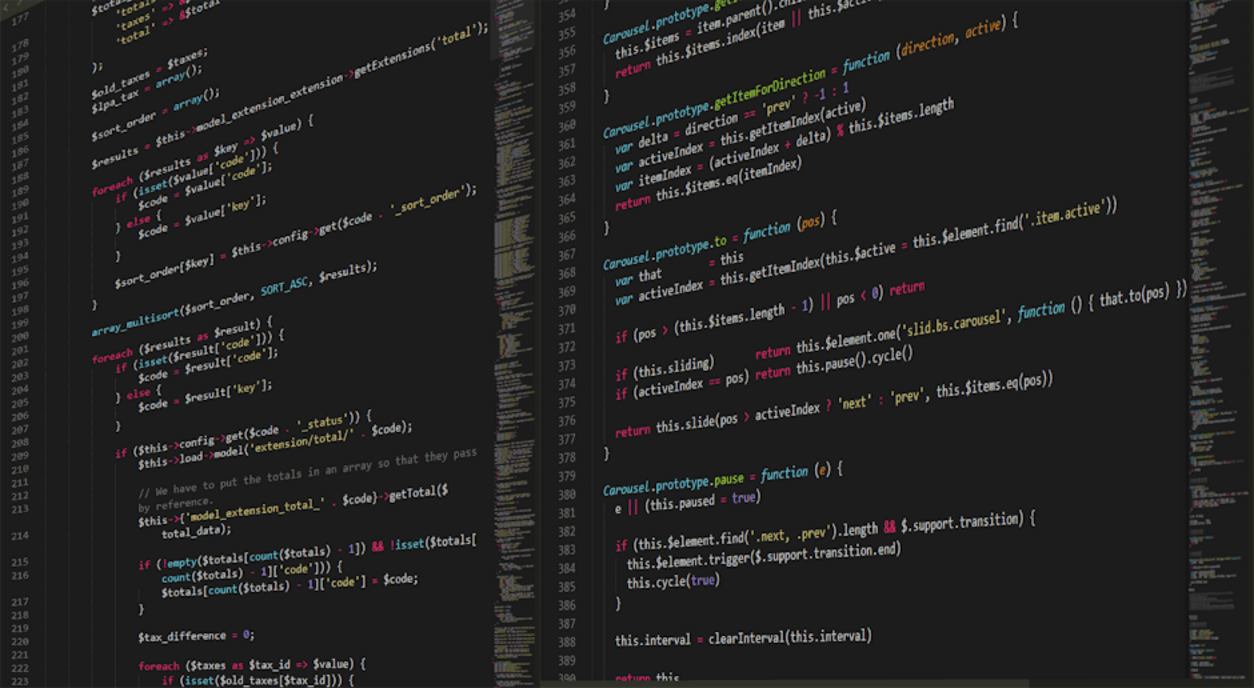
Integrating AI across the software development lifecycle (SDLC) doesn’t mean replacing engineers with robots (despite what sci‑fi suggests). It means embedding intelligent assistance into every phase—strategically.
Phase 1: Planning & Requirements
At this stage, AI analyzes user feedback, support tickets, and market data to surface patterns humans might miss. Sentiment analysis (automated detection of emotional tone in text) can highlight frustration trends, while clustering algorithms group similar feature requests.
Some argue product intuition should drive roadmaps—not algorithms. Fair point. But AI doesn’t replace judgment; it sharpens it. When data from thousands of tickets points to the same bottleneck, ignoring it is risky.
Phase 2: Design & Architecture
AI tools can recommend design patterns, flag scalability risks, and even generate architecture diagrams from text prompts. If you’re exploring options alongside insights from modern web development frameworks compared for 2026, AI can simulate load scenarios before you commit.
Critics say architecture is too nuanced for automation. True—context matters. But early warnings about performance ceilings or dependency conflicts can prevent expensive rewrites later (and no one enjoys those).
Phase 3: Development & Coding
This is where AI in software engineering becomes most visible. AI pair programmers like GitHub Copilot assist with:
- Code generation
- Debugging suggestions
- Instant API references
Opponents worry about overreliance and skill erosion. That risk exists. Pro tip: treat AI output as a draft, not a final answer. Review rigorously.
Phase 4: Testing & QA
AI-powered test optimization prioritizes which tests to run based on code changes. This reduces CI/CD pipeline time and focuses effort on high-risk areas. While skeptics question reliability, machine learning models trained on historical defects often outperform static rule systems.
Phase 5: Deployment & Operations
In production, AI monitors logs, predicts anomalies, and can trigger automated remediation workflows. Some fear “black box” monitoring. The solution? Transparent models and clear override controls.
AI across the SDLC isn’t about surrendering control—it’s about amplifying precision at every stage.
Selecting the Right AI Tools for Your Development Stack
Choosing the right tools for AI in software engineering can feel overwhelming, especially when options blur together. Let’s simplify.
IDE-Integrated Assistants plug directly into your coding environment (IDE stands for Integrated Development Environment, the software where you write and test code). Tools like GitHub Copilot and CodeWhisperer reduce context switching—the mental drain of bouncing between apps (yes, those extra tabs add up). If adoption is your priority, start here.
Platform-Level Solutions operate across your CI/CD pipeline (Continuous Integration/Continuous Deployment, meaning automated build, test, and release workflows). Tools like GitLab Duo (see https://about.gitlab.com/) and Tabnine help enforce consistent code quality and security checks across teams.
Key Selection Criteria
| Criteria | What to Look For |
|---|---|
| Integration | Works with your current stack |
| Language Support | Covers your frameworks |
| Data Privacy | Clear policies for proprietary code |
| Pricing | Scales with team growth |
Pro tip: Pilot with one team before rolling out company-wide.
Navigating the Challenges of AI Implementation
Adopting AI in software engineering promises speed, but the risks are real. First, data privacy and security remain top concerns. Feeding proprietary source code into third-party models can expose intellectual property. In fact, a 2023 IBM report found the average data breach cost $4.45 million globally. Therefore, organizations should prioritize tools with strict data policies or on-premise deployment options.
However, security isn’t the only hurdle. Accuracy and over-reliance pose serious issues. Studies from Stanford show large language models can “hallucinate” incorrect outputs. Consequently, human oversight, peer reviews, and critical evaluation must remain standard practice.
Meanwhile, skill gaps slow adoption. Developers need training not only in usage but in prompt design and validation techniques.
Finally, measuring ROI can be tricky. Consider tracking outcomes like these:
| Metric | Impact Indicator |
|---|---|
| Time-to-merge | Faster releases |
| Bug frequency | Higher code quality |
| CI/CD cycle time | Deployment efficiency |
In short, thoughtful implementation turns potential risk into measurable progress.
Building smarter, not just faster, means rethinking the entire software development lifecycle. The goal of AI integration isn’t speed alone; it’s measurable gains in quality, security, and decision-making. For example, GitHub reports developers complete tasks up to 55% faster with AI-assisted coding, while studies from McKinsey show defect reduction when automated testing tools are applied. However, success depends on strategy. Start with low-risk, high-impact wins—like code reviews or regression testing—before scaling AI in software engineering across teams. In other words, identify one bottleneck, evaluate a targeted tool, measure results, and iterate. Incremental adoption, backed by data, drives sustainable, intelligent transformation.
The Future of Smarter Development Starts Now
You came here to understand how AI in software engineering is reshaping the way modern applications are built, tested, and deployed. Now you’ve seen how automation, intelligent code generation, predictive debugging, and smarter collaboration tools are transforming development workflows from the ground up.
The real challenge isn’t whether AI will influence software engineering — it’s whether you’ll adapt quickly enough to stay competitive. Falling behind means slower releases, higher costs, and missed innovation opportunities while others move faster with AI-powered efficiency.
The good news? You don’t have to navigate this shift alone. Start integrating AI-driven tools into your development stack, experiment with automated testing frameworks, and stay informed on emerging breakthroughs that can streamline your workflow.
If you’re ready to build smarter, ship faster, and future-proof your skills, explore our in-depth tech guides and expert breakdowns today. Thousands of forward-thinking developers rely on us for clear, actionable insights — and your next competitive edge could be one article away. Dive in now and start building the future.
 Roberto Nicholselevarns has opinions about latest technology news. Informed ones, backed by real experience — but opinions nonetheless, and they doesn't try to disguise them as neutral observation. They thinks a lot of what gets written about Latest Technology News, Gadget Reviews and Comparisons, Tech Tutorials and How-To Guides is either too cautious to be useful or too confident to be credible, and they's work tends to sit deliberately in the space between those two failure modes.
Reading Roberto's pieces, you get the sense of someone who has thought about this stuff seriously and arrived at actual conclusions — not just collected a range of perspectives and declined to pick one. That can be uncomfortable when they lands on something you disagree with. It's also why the writing is worth engaging with. Roberto isn't interested in telling people what they want to hear. They is interested in telling them what they actually thinks, with enough reasoning behind it that you can push back if you want to. That kind of intellectual honesty is rarer than it should be.
What Roberto is best at is the moment when a familiar topic reveals something unexpected — when the conventional wisdom turns out to be slightly off, or when a small shift in framing changes everything. They finds those moments consistently, which is why they's work tends to generate real discussion rather than just passive agreement.
Roberto Nicholselevarns has opinions about latest technology news. Informed ones, backed by real experience — but opinions nonetheless, and they doesn't try to disguise them as neutral observation. They thinks a lot of what gets written about Latest Technology News, Gadget Reviews and Comparisons, Tech Tutorials and How-To Guides is either too cautious to be useful or too confident to be credible, and they's work tends to sit deliberately in the space between those two failure modes.
Reading Roberto's pieces, you get the sense of someone who has thought about this stuff seriously and arrived at actual conclusions — not just collected a range of perspectives and declined to pick one. That can be uncomfortable when they lands on something you disagree with. It's also why the writing is worth engaging with. Roberto isn't interested in telling people what they want to hear. They is interested in telling them what they actually thinks, with enough reasoning behind it that you can push back if you want to. That kind of intellectual honesty is rarer than it should be.
What Roberto is best at is the moment when a familiar topic reveals something unexpected — when the conventional wisdom turns out to be slightly off, or when a small shift in framing changes everything. They finds those moments consistently, which is why they's work tends to generate real discussion rather than just passive agreement.