
Technology is evolving faster than ever, and staying informed is no longer optional—it’s essential. If you’re searching for clear, reliable updates on the latest breakthroughs, gadget releases, software innovations, and quantum computing developments, this article is designed to give you exactly that. We cut through the noise to focus on what truly matters: how emerging technologies impact your work, your investments, and your everyday life.
In this piece, you’ll find a concise breakdown of current tech trends, practical insights into new devices and tools, and expert analysis that connects innovation to real-world application. Whether you’re a developer, tech enthusiast, or simply curious about what’s next, our goal is to make complex advancements understandable and actionable.
Our coverage is grounded in hands-on testing, technical research, and continuous monitoring of industry shifts, ensuring you get accurate, up-to-date information you can trust—and use.
Quantum computing has moved from lab curiosity to competitive sprint, especially in hubs like Silicon Valley and Shenzhen’s Nanshan district. Breakthrough announcements now focus on qubit stability—how long a qubit maintains coherence before noise corrupts it. Recent quantum computing developments show error-correction protocols inching toward fault tolerance, a milestone IBM and Google engineers reference in their arXiv preprints. Critics argue it’s still hype, noting limited real-world deployment. Fair. Yet hybrid algorithms already optimize logistics and drug simulations in controlled pilots. The revolution isn’t cinematic; it’s incremental, technical, and undeniably underway. Venture funding in Austin quietly accelerates applied research across industries.
The Heart of the Machine: Breakthroughs in Qubit Stability and Error Correction
The Coherence Challenge
At the core of every quantum computer is the qubit, a unit of quantum information that can exist in superposition (holding multiple states at once). The problem? Decoherence—when a qubit loses its fragile quantum state due to environmental noise. Think of it like a spinning coin collapsing to heads or tails the moment someone bumps the table. Decoherence remains the primary barrier to large-scale machines.
Longer Lifetimes: Trapped-Ion vs. Superconducting
Two leading approaches dominate today:
- Trapped-ion qubits: Use electromagnetic fields to suspend charged atoms. They boast long coherence times—often seconds in laboratory settings.
- Superconducting qubits: Built on microfabricated circuits cooled near absolute zero. They offer faster gate speeds but shorter coherence times, typically microseconds to milliseconds.
Recent breakthroughs in materials science—like improved dielectric substrates and 3D cavity shielding—have extended superconducting lifetimes significantly. Meanwhile, refined laser control has boosted trapped-ion stability. In the race of quantum computing developments, it’s longevity vs. speed.
Smarter Error Correction
Because errors are inevitable, researchers rely on Quantum Error Correction (QEC). Multiple physical qubits combine into a logical qubit, a more stable computational unit. New surface codes and topological approaches reduce the number of physical qubits needed per logical qubit—an essential step toward fault tolerance (when systems can compute reliably despite errors).
Hardware Scalability
Scaling introduces new headaches:
- Connectivity: More qubits mean more cross-talk.
- Control wiring: Cryogenic electronics must manage thousands of signals.
IBM and IonQ now demonstrate processors exceeding 100 qubits, but engineering coherence at scale is the real prize. Bigger isn’t better—better-connected and better-protected is.
Beyond Brute Force: The Evolution of Quantum Algorithms
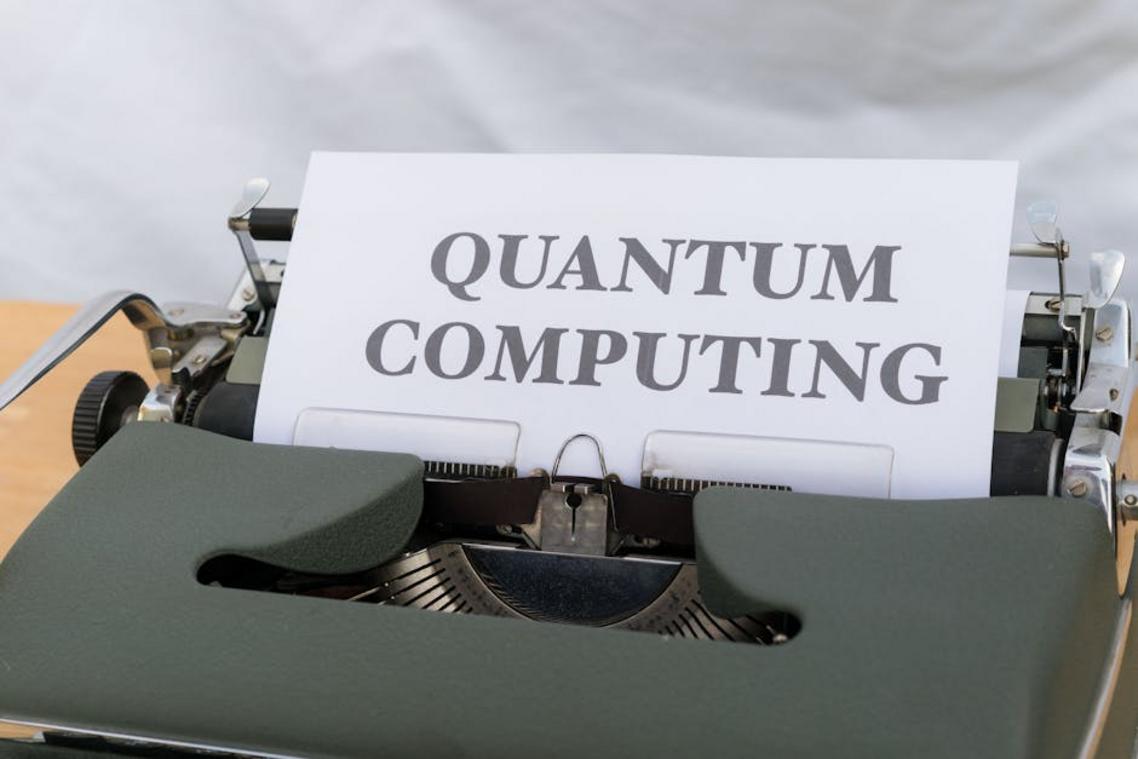
When people talk about quantum breakthroughs, they usually picture futuristic hardware. However, hardware is only half the equation. Without sophisticated algorithms—step-by-step computational procedures designed to solve specific problems—even the most advanced quantum chip is just an expensive science project. In other words, software unlocks the real advantage.
Advancements in Quantum Machine Learning (QML)
For example, Quantum Machine Learning (QML) combines quantum circuits with data-driven models to enhance pattern recognition and classification. Some variational quantum classifiers have demonstrated theoretical speedups for high-dimensional datasets, particularly where classical models struggle with exponential feature spaces (Biamonte et al., Nature, 2017). Admittedly, critics argue classical AI still dominates in real-world deployment. That’s fair—today’s quantum devices are noisy. Yet early benchmarks suggest niche advantages in chemistry simulations and fraud detection tasks.
Refining Optimization with QAOA
Meanwhile, the Quantum Approximate Optimization Algorithm (QAOA) targets combinatorial optimization—problems involving many possible configurations. Logistics routing, portfolio optimization, and workforce scheduling benefit from QAOA’s layered quantum-classical structure. IBM reports steady improvements in circuit depth and error mitigation, increasing solution quality on real hardware (IBM Quantum Reports, 2023).
| Algorithm | Primary Use Case | Key Benefit |
|---|---|---|
| QML Models | Pattern recognition |
High-dimensional efficiency |
| QAOA | Optimization problems | Near-optimal solutions |
| Hybrid Systems | Mixed workloads | Practical scalability |
Hybrid Quantum-Classical Approaches
Notably, hybrid systems split workloads: classical processors manage preprocessing, while quantum units tackle complex subroutines. This trend dominates current quantum computing developments because it delivers measurable gains today—not decades from now.
For broader industry context, see top technology breakthroughs making headlines this month.
So while skeptics question scalability, algorithm innovation continues turning theory into practical advantage.
From Lab to Industry: Quantum Computing’s Emerging Real-World Impact
Quantum computing is no longer confined to physics labs; it’s stepping into boardrooms and R&D departments. To understand its impact, it helps to compare classical computing (today’s silicon-based systems) with quantum machines, which use qubits—units of information that can exist in multiple states at once thanks to superposition.
Pharmaceuticals and Materials Science
Traditionally, drug discovery relies on classical simulations that approximate molecular behavior. That works—up to a point. However, when molecules become highly complex, calculations balloon beyond practical limits. Quantum simulations, by contrast, model molecular interactions at the quantum level. In A vs. B terms: classical systems approximate; quantum systems replicate nature more directly. As a result, researchers are accelerating drug candidate screening and designing better battery materials and catalysts. (Think fewer lab flops and more targeted breakthroughs.)
Financial Modeling
In finance, speed equals advantage. Classical algorithms optimize portfolios sequentially, testing scenarios one after another. Quantum algorithms evaluate many possibilities simultaneously using quantum parallelism. Consequently, firms are piloting systems to price complex derivatives and refine risk analysis. Critics argue classical high-performance computing is “good enough.” Fair point—but early quantum computing developments suggest exponential gains once hardware matures.
Cryptography and Security
Here’s the twist: quantum computing threatens RSA encryption, which secures online banking and emails. Yet simultaneously, researchers are building quantum-resistant cryptography. It’s disruption and defense in one package.
Cloud Access and Democratization
Finally, access is shifting. Instead of owning fragile quantum hardware, businesses tap cloud platforms. Classical ownership vs. quantum cloud access? The latter lowers barriers, fueling experimentation and rapid software innovation.
Navigating the Next Quantum Frontier
The race toward practical quantum systems is no longer confined to university labs in Cambridge or corporate campuses in Silicon Valley. Across research hubs from Munich to Shenzhen, hardware stability and algorithm refinement are moving from whiteboard theory to deployable prototypes. This shift confirms that the field is entering an application-driven phase.
Still, skeptics argue scalability remains too fragile—error rates, decoherence, and cryogenic overhead make large-scale systems impractical. They’re not wrong. Fault-tolerance (the ability of a computer to continue operating despite errors) is the central engineering bottleneck. But recent quantum computing developments show measurable reductions in noise and improved qubit coherence times.
Why does this matter beyond physics circles?
- Financial modeling, drug discovery, and logistics optimization stand to gain exponential processing advantages.
In the next 2–3 years, expect pilot programs targeting commercially relevant “quantum advantage.” The conversation is shifting from speculative potential to deployment timelines—less sci‑fi, more systems engineering reality.
Stay Ahead of the Next Tech Breakthrough
You came here to understand where quantum computing developments stand today and what they mean for the future of technology. Now you have a clearer picture of the breakthroughs, the real-world applications taking shape, and the challenges still ahead.
The pace of innovation isn’t slowing down. If you ignore these shifts, you risk falling behind as industries rapidly adapt to new computational power and possibilities. Staying informed is no longer optional—it’s essential for developers, tech leaders, and forward-thinking enthusiasts.
Here’s your next move: keep tracking quantum computing developments, explore hands-on learning resources, and follow in-depth tech analysis that breaks complex advances into practical insights. Join thousands of readers who rely on our expert reviews, tutorials, and trend reports to stay ahead of the curve.
Don’t just watch the future unfold—understand it, prepare for it, and position yourself to lead in it. Start exploring the latest updates today.
 Marlene Schillingarin writes the kind of latest technology news content that people actually send to each other. Not because it's flashy or controversial, but because it's the sort of thing where you read it and immediately think of three people who need to see it. Marlene has a talent for identifying the questions that a lot of people have but haven't quite figured out how to articulate yet — and then answering them properly.
They covers a lot of ground: Latest Technology News, Emerging Tech Trends, Tech Tutorials and How-To Guides, and plenty of adjacent territory that doesn't always get treated with the same seriousness. The consistency across all of it is a certain kind of respect for the reader. Marlene doesn't assume people are stupid, and they doesn't assume they know everything either. They writes for someone who is genuinely trying to figure something out — because that's usually who's actually reading. That assumption shapes everything from how they structures an explanation to how much background they includes before getting to the point.
Beyond the practical stuff, there's something in Marlene's writing that reflects a real investment in the subject — not performed enthusiasm, but the kind of sustained interest that produces insight over time. They has been paying attention to latest technology news long enough that they notices things a more casual observer would miss. That depth shows up in the work in ways that are hard to fake.
Marlene Schillingarin writes the kind of latest technology news content that people actually send to each other. Not because it's flashy or controversial, but because it's the sort of thing where you read it and immediately think of three people who need to see it. Marlene has a talent for identifying the questions that a lot of people have but haven't quite figured out how to articulate yet — and then answering them properly.
They covers a lot of ground: Latest Technology News, Emerging Tech Trends, Tech Tutorials and How-To Guides, and plenty of adjacent territory that doesn't always get treated with the same seriousness. The consistency across all of it is a certain kind of respect for the reader. Marlene doesn't assume people are stupid, and they doesn't assume they know everything either. They writes for someone who is genuinely trying to figure something out — because that's usually who's actually reading. That assumption shapes everything from how they structures an explanation to how much background they includes before getting to the point.
Beyond the practical stuff, there's something in Marlene's writing that reflects a real investment in the subject — not performed enthusiasm, but the kind of sustained interest that produces insight over time. They has been paying attention to latest technology news long enough that they notices things a more casual observer would miss. That depth shows up in the work in ways that are hard to fake.