
Picking between microservices and a monolith is genuinely tough, and the stakes are real. Your app’s performance, scalability, and maintenance costs all hinge on getting this decision right. You’ve probably landed here because you’re actually wrestling with the question: which approach scales with your project size, your growth plans, and the team capacity you’ve actually got? It’s not abstract.
Here’s the thing about monolithic versus microservices architectures: they’re fundamentally different approaches, each with real strengths and real costs. We’ll walk through what sets them apart, where each excels, and, crucially, when you should pick one over the other. Building a startup MVP? Scaling an enterprise platform? Your architecture choice needs to match your technical realities and business objectives. Get that wrong, and you’ll pay for it later.
This guide pulls from real development case studies, conversations with seasoned software engineers, and what actually works in production today. You won’t just learn which architecture fits your project. You’ll understand why it matters. The difference matters more than you’d think.
Choosing your software’s blueprint: monolith vs. Microservices
Every project starts with an architectural bet. Get it wrong, and you’re renovating a house that already has concrete poured. The microservices vs monolith debate? It usually sidesteps what counts, your actual context, how mature your team is, what your deployment pipeline can handle, whether you’ve got the ops chops to manage the complexity. Most teams skip over that part.
A monolith is a single, unified codebase deployed together. A microservice is an independently deployable service handling one business capability.
Competitors rarely highlight hidden costs:
- Distributed debugging overhead (it’s real)
- DevOps readiness requirements
- Cross-service latency trade-offs
Monoliths excel for small teams needing SPEED. Microservices shine when domain boundaries are CLEAR and growth is inevitable.
The monolith: a unified and cohesive structure
I still remember my first production app: one codebase, one database, one deployment pipeline. When something broke, we all knew exactly where to look, usually that same bloated 12,000-line file. That’s a monolith. One indivisible unit. All components woven together, deployed as a single mass. Tightly coupled means each part leans on the others, so change one thing and you’re gambling that nothing else cascades. One bad deploy could take down everything at once. That was the reality we lived with.
At first blush, this structure feels refreshingly simple. Development moves fast because everything lives in one place. Testing’s straightforward, you’re validating a unified system, not juggling inter-service communication. Deployment? Push once and you’re done. For early-stage teams, that efficiency is gold.
As the application grows, cracks start to show. Scaling gets tricky, you’ve got to scale the entire thing, even when just one feature’s taking the heat. Technology lock-in’s a real problem, too. Switching frameworks or languages means ripping out the foundation of a skyscraper. Without discipline, the codebase devolves into what engineers call a “big ball of mud.” It’s unstructured. It’s tangled. And it doesn’t get any easier to untangle once you’re stuck in it.
Some argue microservices beat monolith architecture in every scenario. I don’t buy it. For plenty of startups, a monolith isn’t a failed experiment, it’s the right call. You get simplicity, faster iteration, fewer moving parts to debug at 2 a.m. The actual trick is knowing when that simplicity stops serving you and starts actively holding you back. That inflection point isn’t the same for everyone.
Microservices: an ecosystem of independent services

Microservices break applications down into small, independent services. Each one handles a single business capability: payments, user authentication, inventory management. You’re not wrestling with one massive codebase anymore. Instead, focused services talk to each other through APIs. It’s structured communication between software components, nothing more. And because they’re decoupled, you can deploy one without touching the others, scale them independently, even swap out technologies if the old one stops making sense for that particular job.
So what’s in it for you? Independent scalability tops the list. Your checkout service gets hammered? Scale that one piece. You don’t touch the rest of the system. Infrastructure costs drop. Performance goes up. Then there’s technological diversity, teams pick the right language, the right database, whatever fits the job. No one-size-fits-all constraint. In the microservices versus monolith debate, that kind of flexibility wins.
Fault isolation improves resilience. When one service fails, the others keep running, like a ship with watertight compartments. Smaller codebases? They’re simpler to update and deploy. Maintenance gets easier.
These benefits don’t come without friction. Distributed data management is messy. Network latency gums up communication. Operational overhead balloons fast. You’re just adding complexity without the payoff unless you’ve got solid DevOps practices and sharp monitoring tools in place. It’s that simple.
Direct comparison: a head-to-head architectural analysis
Let’s cut through the hype around microservices vs monolith architecture. The internet treats microservices like they’re the inevitable evolution, streaming replacing DVDs. But here’s the thing: it’s way more nuanced than that. And honestly? Sometimes less glamorous too.
Scalability
Monoliths scale vertically. You just add more power, CPU, RAM to a single server. Critics say it’s expensive and finite, which is fair. Vertical scaling does have real appeal, though, at least in terms of simplicity and predictability. Microservices work differently, they scale horizontally by distributing workloads across multiple instances instead. That’s where the real granularity kicks in. Only the payment service, for instance, needs extra resources during peak checkout hours. You’re not over-provisioning the whole system just because one component spikes.
- Monolith: Simpler scaling, higher hardware ceilings
- Microservices: Flexible scaling, higher infrastructure coordination
That said, horizontal scaling introduces networking overhead and distributed system complexity (which people conveniently forget).
Development velocity
For small teams, monoliths often win, one codebase, one deployment pipeline, faster iteration. Microservices? They shine when teams grow and need parallel workflows. Independent services cut bottlenecks, sure, but only after you’ve actually invested in automation and governance.
Pro tip: If you don’t already follow strong version control and CI/CD discipline, microservices will magnify your chaos.
Deployment complexity
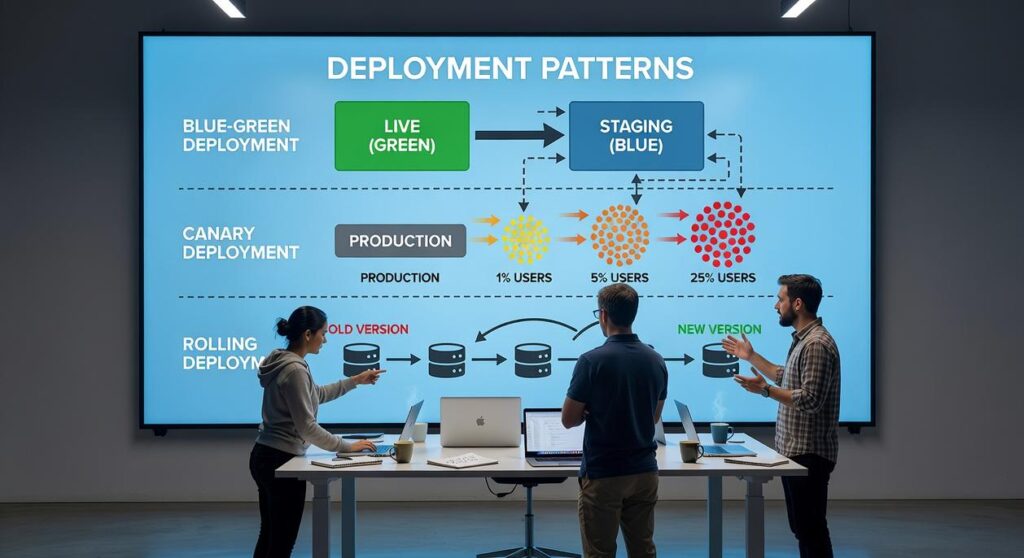
A monolith deploys as a single unit. Clean. Predictable. Microservices require orchestration tools like Kubernetes and robust pipelines aligned with devops best practices for faster deployment cycles. More flexibility, yes—but also more moving parts.
Reliability & fault tolerance
It’s commonly claimed monoliths are fragile, a single bug can bring the whole thing down. True enough. But distributed systems? They fail in more creative ways. Network timeouts. Cascading failures. Inconsistent states nobody predicted. Microservices isolate failures, sure, but they introduce new failure modes that monoliths never had to worry about.
In short, microservices aren’t automatically superior. They’re powerful, but power without operational maturity is just complexity wearing a cape.
Making the right choice: a decision framework for your project
Choosing between microservices vs monolith architecture isn’t about trends—it’s about context.
When to Choose a Monolith A monolith, a single, unified codebase where all components are interconnected, works best for startups, proofs-of-concept, or small teams without much DevOps experience. Need to get to market fast? A monolith cuts operational overhead and deployment complexity down considerably. It’s like launching an MVP before you scale. Simple. Fast. Focused. Yeah, critics will tell you monoliths turn into “big balls of mud,” but that’s not inevitable. With clean modular design, they can scale way further than people think (Instagram started as one). Worth remembering.
Microservices break applications into independent, deployable pieces. They work best for large, complex systems handling heavy traffic or supporting distributed teams across multiple locations. There’s a cost: networking overhead, monitoring complexity, operational friction. But the payoff matters. You can scale individual services without redeploying the entire application, and teams move at their own pace without constant coordination overhead. That’s where the real win lives.
The Hybrid Approach
The Strangler Fig pattern gradually replaces monolith components with services over time—no risky rewrite required. Pro tip: start simple, then evolve. For deeper comparisons, see https://scookietech.com.
Architecting for future success
You now understand how architecture choices shape development, scalability, and maintenance. The real challenge isn’t picking a winner in the microservices vs monolith debate, it’s selecting what fits your constraints and future ambitions. Start by auditing team size, deployment frequency, and domain complexity. A small team shipping one product? A unified codebase probably makes sense. But distributed teams often need service autonomy.
• Map technical requirements to business goals before committing.
Map out your nonfunctional requirements upfront, performance, reliability, scalability, and make the tradeoffs explicit. Why? Because guessing costs more than planning. Prototype your workflows to expose bottlenecks early. That’s where the real learning actually happens, and it’s messy. This kind of clarity cuts expensive rewrites down the line. A system built this way doesn’t limp along; it actually holds up.
Build smarter, scale faster
You came here wanting to understand Microservices vs monolith architecture, and which approach actually fits your project. Now you’ve got a clear picture. Scalability looks different in each. Performance implications matter. Development speed shifts. Long-term maintenance? That’s where things get messy.
Getting the architecture wrong can tank your release schedule, blow your budget, and saddle you with technical debt that becomes a nightmare to fix. The risk is real. You need to get this decision right from the start. Not later, not after a redesign, now.
Planning a new build or migration? Start by sizing up your team, mapping your scalability goals, and understanding what deployment complexity actually means for you. Do that first. Then, once you’ve got clarity on those three things, you can sketch out an architecture strategy that actually holds together when you start coding. Skip this groundwork and you’ll regret it.
Dig into our latest architecture breakdowns and hands-on tutorials. Thousands of developers rely on them for a reason. You’ll find expert comparisons, step-by-step technical guidance. Real content that stops you from ripping out half your stack six months later when you realize what went wrong. Build smarter. Start now.
 Marlene Schillingarin writes the kind of latest technology news content that people actually send to each other. Not because it's flashy or controversial, but because it's the sort of thing where you read it and immediately think of three people who need to see it. Marlene has a talent for identifying the questions that a lot of people have but haven't quite figured out how to articulate yet — and then answering them properly.
They covers a lot of ground: Latest Technology News, Emerging Tech Trends, Tech Tutorials and How-To Guides, and plenty of adjacent territory that doesn't always get treated with the same seriousness. The consistency across all of it is a certain kind of respect for the reader. Marlene doesn't assume people are stupid, and they doesn't assume they know everything either. They writes for someone who is genuinely trying to figure something out — because that's usually who's actually reading. That assumption shapes everything from how they structures an explanation to how much background they includes before getting to the point.
Beyond the practical stuff, there's something in Marlene's writing that reflects a real investment in the subject — not performed enthusiasm, but the kind of sustained interest that produces insight over time. They has been paying attention to latest technology news long enough that they notices things a more casual observer would miss. That depth shows up in the work in ways that are hard to fake.
Marlene Schillingarin writes the kind of latest technology news content that people actually send to each other. Not because it's flashy or controversial, but because it's the sort of thing where you read it and immediately think of three people who need to see it. Marlene has a talent for identifying the questions that a lot of people have but haven't quite figured out how to articulate yet — and then answering them properly.
They covers a lot of ground: Latest Technology News, Emerging Tech Trends, Tech Tutorials and How-To Guides, and plenty of adjacent territory that doesn't always get treated with the same seriousness. The consistency across all of it is a certain kind of respect for the reader. Marlene doesn't assume people are stupid, and they doesn't assume they know everything either. They writes for someone who is genuinely trying to figure something out — because that's usually who's actually reading. That assumption shapes everything from how they structures an explanation to how much background they includes before getting to the point.
Beyond the practical stuff, there's something in Marlene's writing that reflects a real investment in the subject — not performed enthusiasm, but the kind of sustained interest that produces insight over time. They has been paying attention to latest technology news long enough that they notices things a more casual observer would miss. That depth shows up in the work in ways that are hard to fake.